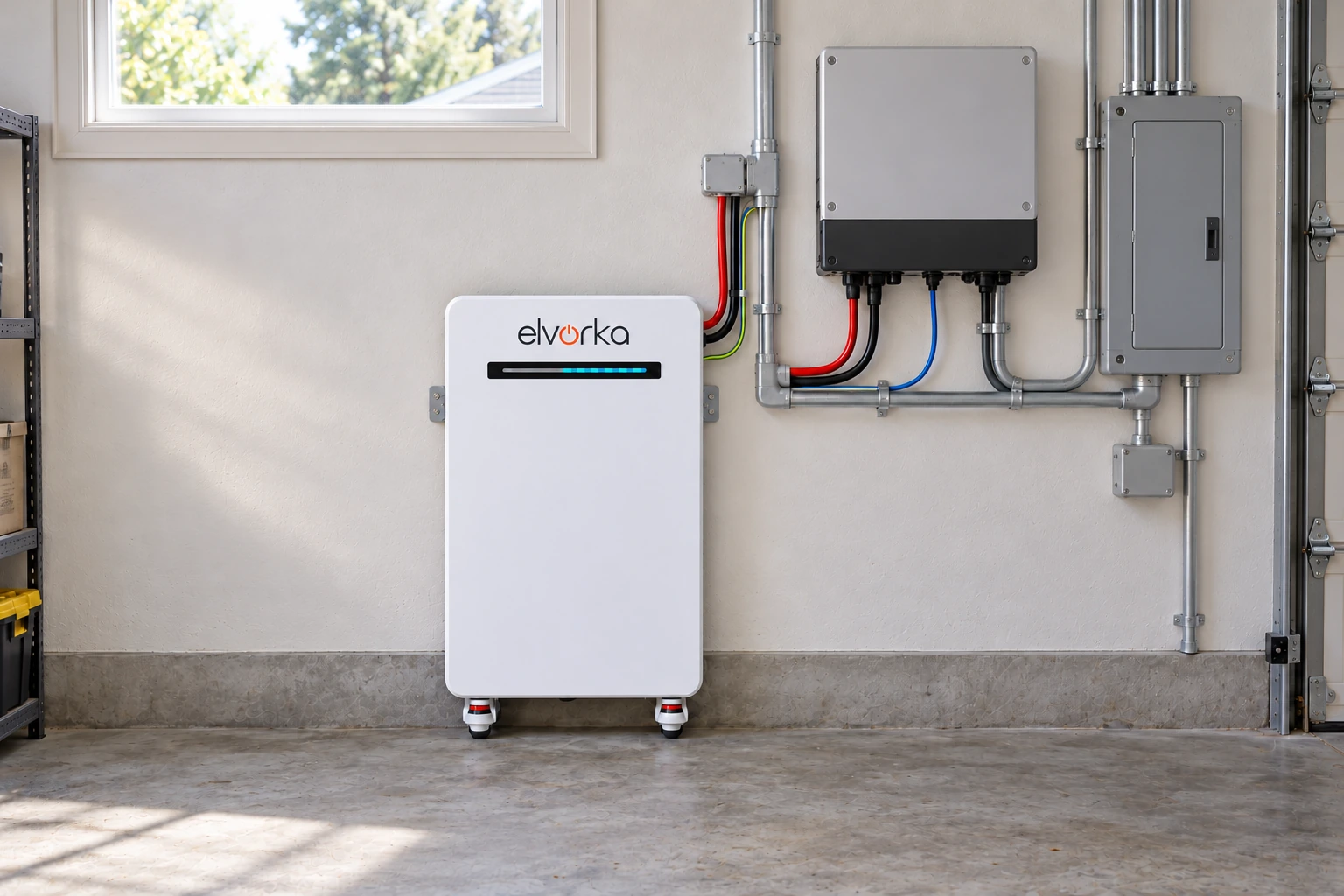
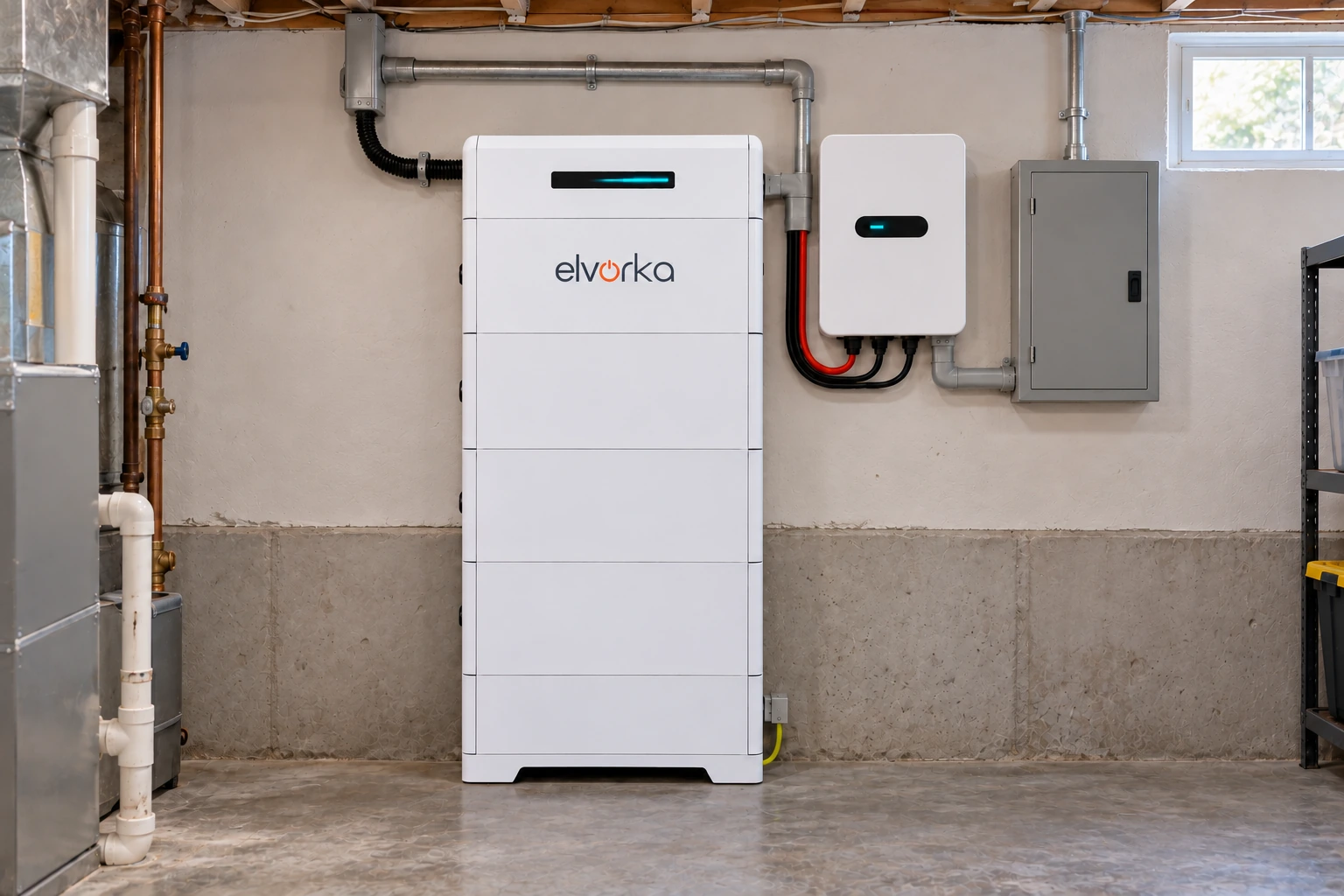
A dry utility room, a seasonally hot garage and a coastal service area place different demands on equipment. Assess conditions where the battery will stand, including the coldest and hottest periods. The following local profiles help frame the questions; they do not certify a particular installation.
A dry utility room, a seasonally hot garage and an unconditioned space need different installation decisions. Use the proposed room's temperature and exposure, alongside the loads and supply configuration, to narrow the product choice.
Start with the room. Then size the backup.
Dry utility room with selected backup circuits
Bring refrigeration, communications and selected lighting into one essential-load plan, rather than assuming every circuit will be backed up.
An integrated system keeps battery and inverter selection together. For TA6000, confirm the exact source-listed 120 V US configuration and supported circuits; split-phase capability is not established by the supplied material.
Questions for your installer
- Which circuits and appliance starting loads need support?
- What is the actual supply configuration for this project?
Garage with seasonal heat or cold
The garage's indoor conditions matter more than the outdoor forecast. Keep the cabinet in its designated equipment space with cooling paths and service access.
TR Pro lists charging from 0 to 55 °C (32 to 131 °F) and discharging from −20 to 60 °C (−4 to 140 °F). Optional self-heating needs exact-model confirmation; a discharge minimum does not establish a below-freezing charge rating.
Questions for your installer
- What are the lowest and highest temperatures at the proposed battery location?
- Can condensation, wash water, heat sources or stored items affect the equipment space?
Existing inverter or modular storage project
A battery-only option lets the storage choice follow the existing or planned inverter, provided the electrical and communication interfaces match.
TR Pro is 51.2 V; HP Ultra is a high-voltage stack. Match DC voltage, current settings and CAN/RS485 support. Ask the installer which configuration and project documentation are required.
Questions for your installer
- What is the inverter's make, model and battery-voltage window?
- What AC output and documentation are required for the proposed installation?
Planning notes
- Plan battery energy in kWh and inverter output in kW separately; whole-home backup requires a project-specific load and supply assessment.
- The supplied product literature does not establish US certification/listing status or 120/240 V split-phase capability. Request the exact configuration and documentation for the project.
- US temperature equivalents are unit conversions of the source Celsius values. They do not add environmental performance claims.
Keep charging and discharging limits separate
The TR Pro literature lists charging at 0–55 °C and discharging at −20–60 °C. The colder discharge boundary is not permission to charge below zero. Self-heating is optional and must be confirmed for the exact configuration. HP Ultra temperature limits require configuration confirmation; do not transfer another family's limits to it.
Read the views, then request the exact manual
The technical library retains the original product views and numbered interface labels. A visible connector is not enough to infer a pinout, polarity or power rating. Confirm the selected model's wiring diagram, protection, cable requirements, clearances, torque values and communication settings from its installation documentation. The scene illustrations are visual references, not wiring instructions.
Record the proposed room, expected temperatures, moisture exposure and maintenance access. For an integrated system, confirm the required AC configuration. For a battery-only system, include the existing inverter model and DC voltage range in the brief.
Questions for your installer
Does a larger battery automatically provide whole-home backup?
No. Stored energy, inverter power, starting loads and supported circuits all matter. Define the circuits first, then choose the battery and inverter configuration.
Can I use a below-freezing discharge rating as a charge rating?
No. Charging and discharging limits are different. TR Pro lists a 0 °C (32 °F) charging minimum; self-heating is optional and its operating conditions require exact-model confirmation.
Are all catalogue models already confirmed for US installation?
No. This page presents the source product collection for project matching. Electrical configuration, compatibility, required test/listing documentation and installation scope need confirmation for the specific model and site.